

The bellows is the flexible element of an expansion joint, so the metal it is made from decides how well the joint holds up in service. Pressure and temperature determine the material selection, and the media determines whether that material lasts. The wrong material for the media leads to chemical degradation before the joint reaches its rated service life.
Titanium is one of the metallic bellows materials, along with stainless steel and nickel alloys. This guide explains what titanium offers, what it costs, and when to consider it.
Titanium at a Glance
- Chloride resistance: superior chloride corrosion resistance.
- Stiffness: lower than stainless steels.
- Weight: lower than stainless steel or nickel alloys.
- Cost: higher as compared to other materials.
- Availability: harder to form into bellows, so fewer manufacturers produce them.
Titanium vs. Stainless Steel vs. Nickel Alloys
Each bellows material has its own weak point. Stress corrosion is caused by chlorides in austenitic stainless steels, and by caustics and high-temperature sulfurous gas in nickel alloys.
| Stainless Steel (300 Series) | Nickel Alloys | Titanium | |
| Chloride behavior | Subject to chloride stress corrosion cracking | Typically specified for steam service to avoid chloride-induced stress corrosion | Superior chloride corrosion resistance |
| Other limits | Carbide precipitation in unstabilized materials at high temperatures | Caustic-induced stress corrosion; sulfur | Higher cost, harder to form |
| Weight | Heavier than titanium | Heavier than titanium | Lower |
| Stiffness | Higher than titanium | Higher than titanium | Lower than stainless |
| Availability | Readily available | Varies depending on Grade | Fewer manufacturers |
Titanium is not normally a stocked material, so confirm availability and lead time with an engineer early.
Four Questions to Ask Before Choosing Titanium
What Is in the Media?
Match the bellows material to the fluid’s exact chemical composition and operating temperature. If chlorides are present, ensure the material can withstand the exposure.
What Are the Pressure and Temperature Conditions?
Both parameters play a critical role in material selection.
How Many Flex Cycles Are Expected?
Expected cycle life influences material selection and bellows wall thickness.
Can You Accommodate the Cost and Smaller Supplier Base?
Weigh these considerations against the performance benefits of titanium.
Titanium in the Field
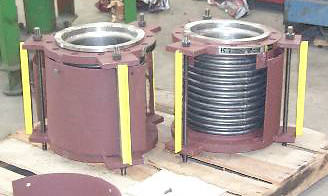
- Application: US Bellows manufactured 10-inch single-tied titanium expansion joints for a chemical plant in Kingsport, Tennessee.
- Pressure Thrust Restraint: The tie rods restrain the full pressure thrust.
- Quality Inspection: The joints underwent 100% dye-penetrant examination before shipping.
FAQs
Q: Does US Bellows make titanium bellows?
A: Yes. The metallic bellows page lists titanium among the alloys US Bellows uses, and the Kingsport joints above are one example.
Q: Who selects the bellows material?
The bellows material shall be specified by the user and must be compatible with the flowing medium. Media varies from system to system, so Piping Technology does not make specific recommendations on bellows material. If any doubt exists, the material page recommends consulting a metallurgist with the appropriate basic material supplier.
Q: When do nickel alloys come into the picture instead?
A: The buyer’s roadmap says nickel alloys such as Inconel or Hastelloy may be needed in high-chloride or corrosive environments, or at extreme temperatures (above 1200°F), to prevent stress corrosion cracking.
Considering Titanium for Your Line?
Send us the media, pressure, temperature, and cycle requirements, and our engineers will review your application with you. Schedule time with an engineer to talk through the alloy options, or request a quote for an expansion joint built to your requirements.
Upcoming Live Webinar
Sign-up for a Live Technical Webinar…
Fabric Expansion Joints Webinar by U.S. Bellows, Inc.
Date: Thursday, October 29, 2026 - Register for 10:00 am OR 2:00 pm
*Note: Time Zone is CDT * Central Daylight Savings Time / GMT -5h
Live Webinars are 1 PE/PDH Credit for TX Professional Engineers
Get to know U.S. Bellows from introducing our team and manufacturing capabilities to exploring design details in technical drawings for large-scale projects. View case studies that lead to the creation of new standards and designs. Learn about cost-saving measures for expansion joint failures and how to prevent future problems.
Upcoming Webinars:
No upcoming webinars. Please check later.
View video recordings from past webinars…
Online Course
Expansion Joint Application and Design
Our Expansion Joint course was developed for the following disciplines…
- Piping system designers that may decide to use expansion joints
- Expansion joint designers use the information provided by piping system designers to determine the best design to meet the requirements.
- Designers that use modern software systems to evaluate different options
- Engineers / Managers: field, maintenance, process, operations, construction, surveyors
*This online course is approved for 8 hrs. P.E. Credits
Register Now