


Call 1-281-241-9418 or connect with an expansion joint expert.
Features
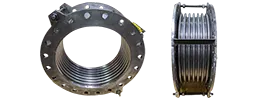
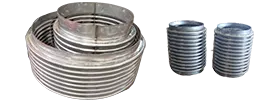
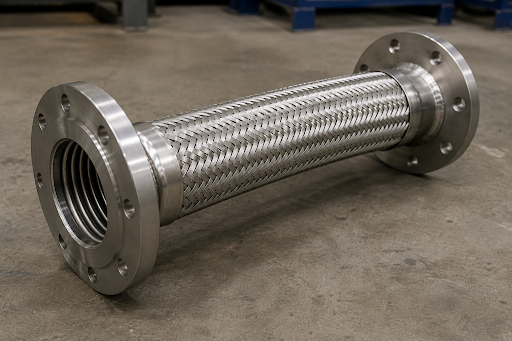
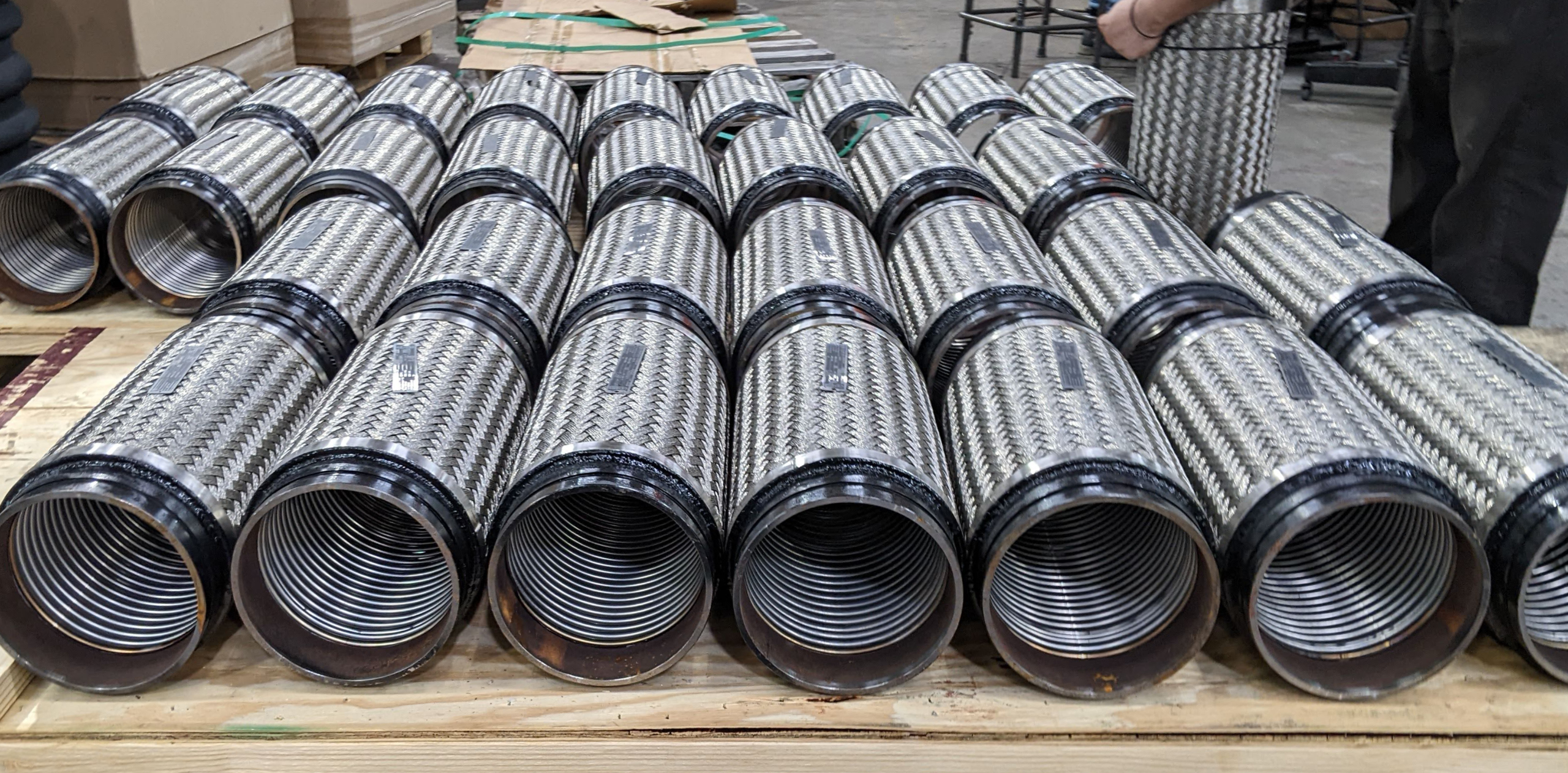
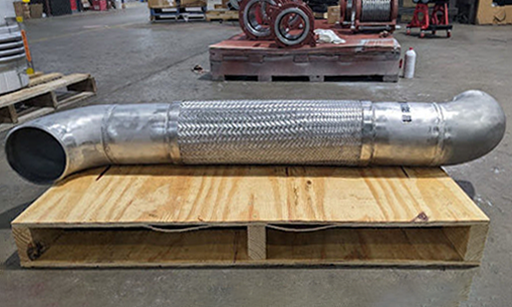
- Corrugated hose provides flexibility; external wire braid restrains pressure thrust and limits axial extension
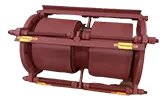
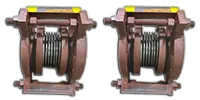
- Fewer structural components than a tied expansion joint, no tie rods, lugs, guides, or gussets
- Absorbs mechanical vibration transmitted from rotating or reciprocating equipment (pumps, compressors, turbines)
- Accommodates small lateral movements through bending distributed over the hose’s flexible length
- Tolerates limited installation misalignment between equipment and piping
- More compact installation footprint than a tied expansion joint, which needs room for tie-rod hardware and its movement envelope
- Straightforward to remove and reinstall where the connection is a maintainable component
Technical Information
- Design Standards – Fabrication, testing, installation, and application follow recognized metallic hose practices (NAHAD guidance); the piping system itself is governed by the applicable code (ASME B31.1, B31.3, or project-specific).
- Pressure Thrust & Piping Loads – Restraining pressure thrust internally does not eliminate the load on connected equipment; hose stiffness, bending forces, weight, dynamic loads, and installation geometry must still be accounted for in the piping load analysis.
FAQs
What restrains the pressure thrust on a braided hose if there are no tie rods?
The external wire braid restrains axial extension of the corrugated hose under internal pressure, the same function tie rods perform on a tied expansion joint.
Can a braided hose correct piping misalignment?
It can accommodate limited misalignment, but should not be used to correct severe misalignment or a poorly installed run; doing so consumes part of the hose’s available flexibility and may reduce service life.
Why does flexible length matter?
Movement is accommodated through bending, not stretching. Insufficient length forces a smaller bending radius under the required movement, increasing corrugation stress and reducing fatigue life.
What information is needed to specify a braided flexible hose?
Required movement (type and magnitude), available installation length and space, connected equipment (to assess vibration isolation needs), degree of any installation misalignment, and the governing piping code for the system.
Can a flex hose absorb torsion?
No. There’s a common misconception that flexible hoses can handle torsional loading; they can’t. Corrugated hose is designed to flex through bending, not twisting, and torsion is not a movement the hose is built to absorb.
Does restraining pressure thrust mean the hose eliminates all loads on connected equipment?
No, this is a common misconception among piping engineers. The braid restrains pressure thrust only. It does not eliminate hose stiffness, bending reactions, weight, dynamic loads, or the effects of installation geometry. All of these loads and reactions must still be included in the piping stress analysis (PSA); pressure-thrust restraint removes one specific load from the equation, not the whole load case.
Request a Quote