

When a metallic bellows fails, the priority is restoring system integrity with minimal disruption to operations. In many facilities, the standard approach of removing and replacing the existing expansion joint is not always practical. Surrounding piping, structural steel, refractory systems, or insulation can make removal time-consuming, costly, and in some cases, simply not feasible within the available outage window.
A clamshell bellows addresses this directly. US Bellows fabricates two distinct configurations: oversized and the same size clamshells. Selecting the right one depends on the specific conditions of the repair.
This article explains how each type works, when to use one over the other, and what to consider before contacting an engineer.
What Is a Clamshell Bellows?
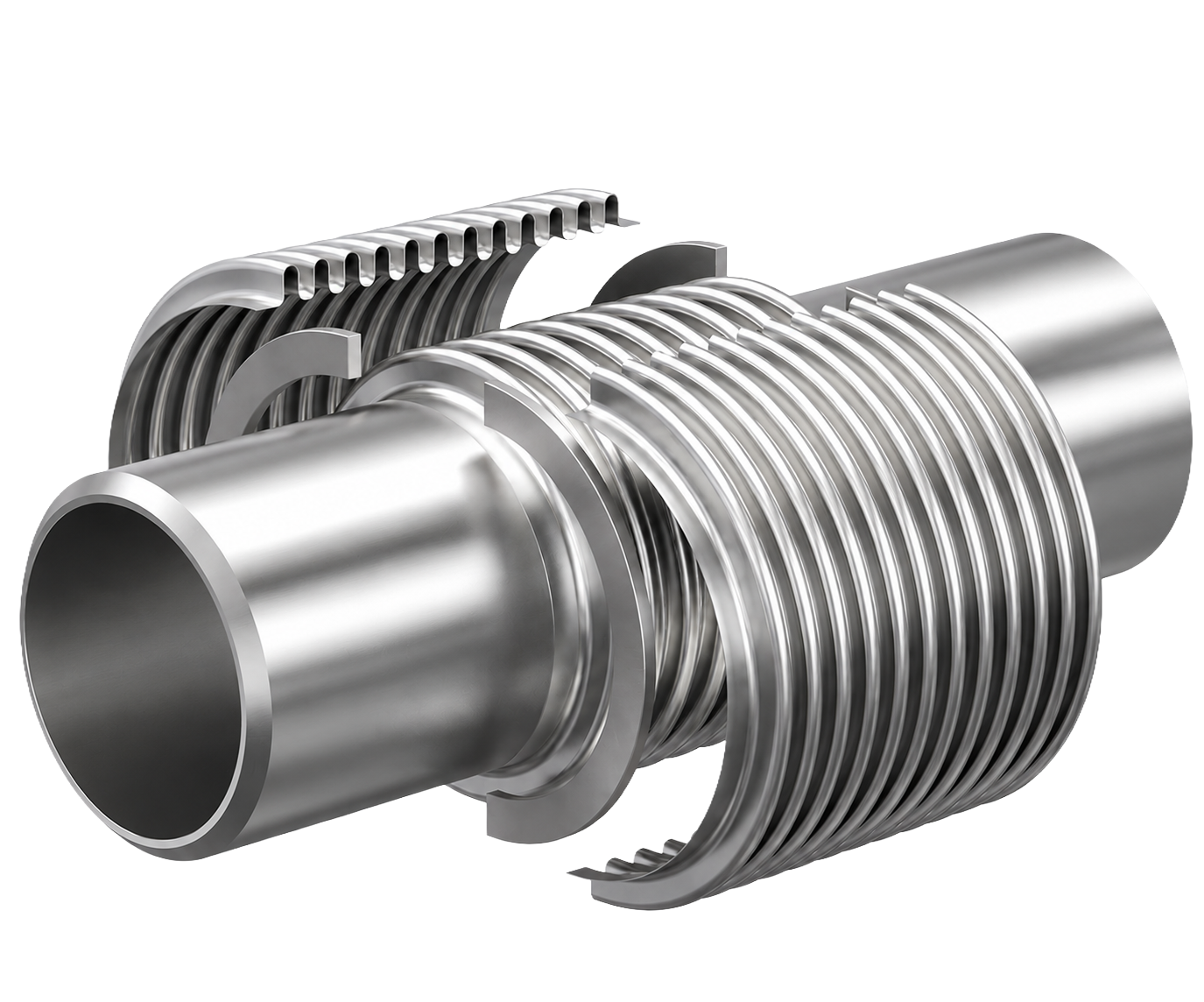
A clamshell bellows is a split metallic bellows assembly manufactured in two longitudinal halves. The halves are assembled around the damaged or leaking bellows and welded together, either in the field or in the shop, without requiring the full removal of adjacent piping, structural components, or surrounding equipment.
Clamshell bellows are fabricated in single-ply metallic bellows only. They are not suitable for fabric or rubber expansion joints, in these cases, contact us to discuss repair options. There are no inherent pressure or temperature class restrictions; each assembly is custom-designed to the material, geometry, and service conditions of the existing joint.
Note – Clamshell bellows are a temporary repair solution. They restore system containment and allow continued operation while a permanent replacement is planned.
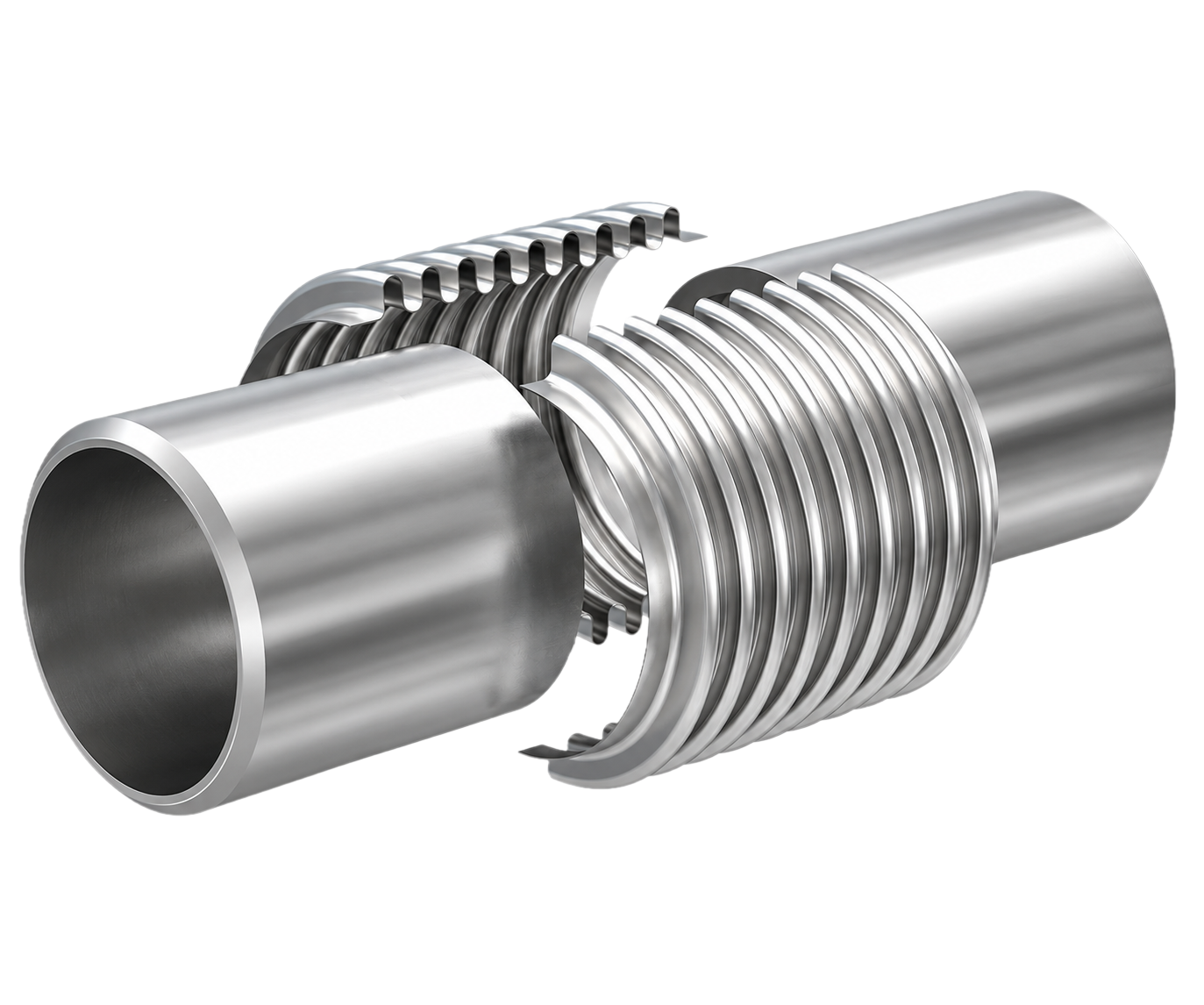
The Two Configurations
Oversized Clamshell
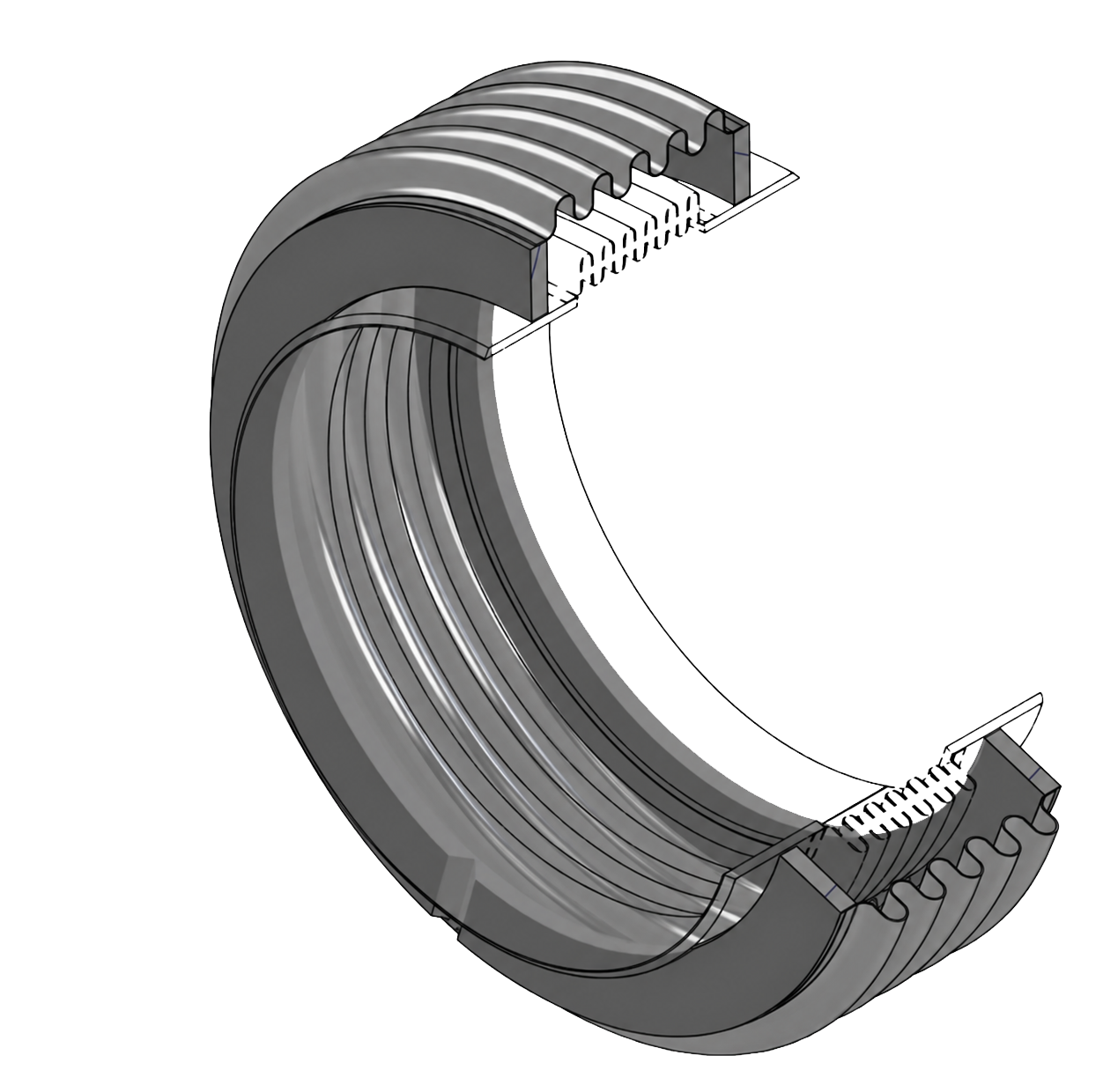
An oversized clamshell uses rings to increase the enclosure diameter beyond that of the existing bellows. The assembly is built to enclose the failed joint from the outside, without making contact with it, cutting it, or removing it. The repair is performed entirely in the field.
This configuration is used when removing the existing bellows is not practical. Large-diameter joints surrounded by permanent piping, structural steel, refractory, or insulation are typical candidates. In these situations, the cost and time required to dismantle the surrounding system can far exceed the cost of the clamshell itself. The oversized design eliminates that work entirely.
Field installation requires slow, precise welding along the longitudinal seams. Access constraints, working at elevation, and tight clearances all add to the complexity of the weld. This is the primary tradeoff of the oversized configuration: it avoids disassembly, but the field weld must be executed carefully under site conditions.
Same-Size Clamshell
A same-size clamshell is manufactured to match the dimensions of the existing bellows. It is designed for situations where the existing joint, or the equipment it is part of, can be removed and either sent to the US Bellows facility for a shop repair or replaced in the field after the original bellows has been taken out.
This configuration is better suited for turnaround scenarios. When a failed bellows is discovered during a planned or unplanned outage, and there is sufficient time to remove the joint, a same-size clamshell can be fabricated and installed with tighter quality control, full weld access, and US Bellows can provide complete ASME documentation when required.
Comparison at a Glance
| Oversized Clamshell | Same-Size Clamshell | |
| How it works | Rings increase the enclosure diameter to fit over the existing bellows | Manufactured to match the dimensions of the existing bellows |
| Best suited for | Large-diameter field repairs, emergencies where removing the existing joint is impractical | Turnarounds where the equipment can be sent to the shop or the EJ can be removed in the field |
| Installation | Field-welded in place around the existing failed joint | Shop repair at the US Bellows facility, or field installation after joint removal |
| Key advantage | No need to cut, remove, or disturb the existing bellows or surrounding components | Tighter quality control, full weld access, and ASME documentation are more straightforward |
| Primary tradeoff | Higher fabrication cost; field welding required under site conditions | Removal of the existing joint or equipment adds time and labor |
| Typical application | Large-diameter lines with surrounding refractory, structural steel, or insulation | Heat exchangers, turnaround repairs with a sufficient outage window |
How to Determine Which Configuration Fits Your Situation
The decision comes down to two questions:
1. Can the existing bellows or equipment be removed?
If yes, and there is time in the outage window to do it, the preferred option is for a new bellows replacement to be provided. However, in cases such as heat exchangers, where disassembly would be time-consuming, a same-size clamshell is generally the more controlled repair. It allows for shop fabrication, easier welding, and straightforward ASME documentation.
If removal would require cutting permanent piping, dismantling structural supports, removing refractory or insulation, or using crane support for a large-diameter joint, an oversized clamshell avoids that work entirely.
2. What are the access conditions at the joint location?
Oversized clamshells are designed specifically for constrained conditions. If the joint is surrounded by equipment, located at elevation, or embedded in a system where adjacent components cannot easily be disturbed, field installation of an oversized clamshell is the practical path.
What US Bellows Needs to Design A Clamshell
Regardless of which configuration applies, the following information is required to start the engineering review:
- Nominal pipe size and bellows outside diameter
- Material and ply count of the existing bellows
- Design pressure and temperature
- Type of movement accommodated (axial, lateral, angular)
- Accessibility constraints and site conditions
- Drawings or dimensional sketches of the existing assembly, when available
For urgent repairs, US Bellows’ engineering team is available around the clock. Both configurations can be designed and fabricated on emergency turnaround schedules when the situation requires it.
Have a bellows failure or an upcoming turnaround? Contact US Bellows or schedule a meeting with an engineer to discuss which clamshell configuration fits your situation.