

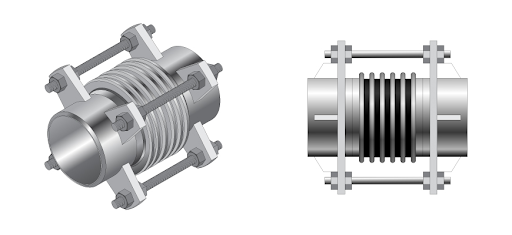
In a restrained expansion joint assembly, the hex nuts on a tied expansion joint are intentionally positioned with a measured gap between the nut and the lug. Customers frequently ask whether this clearance is necessary. The answer is yes – it is a critical design feature that allows the expansion joint to function as intended while protecting the bellows from excessive loads.
While “control rod” and “tie-rod” are sometimes used interchangeably in the expansion joint industry, they serve different functions. Tie-rods are meant to continuously restrain full pressure thrust and permit only lateral movement during normal operation (i.e, there’s no gap in between the rods and nuts). Control rods are meant to prevent over-extension or compression (i.e, there’s a gap in the rods and nuts), and are designed to contain the full pressure thrust in case of an anchor failure.
This article explains the purpose of the clearance between the nuts and the lugs and how it is determined during design. We will also look at consequences for the piping system when it is altered in the field.
What Is the Nut and Lug Clearance?
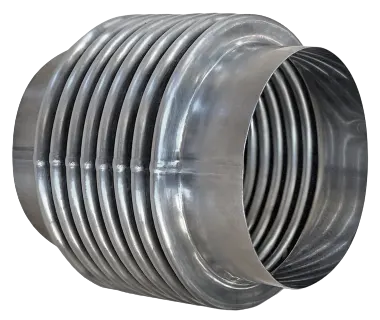
An expansion joint is designed to absorb movement in a piping system. As the line heats up and cools down, the pipe expands and contracts, and the bellows compress and extend to absorb that movement, preventing it from transferring to the surrounding piping and equipment.
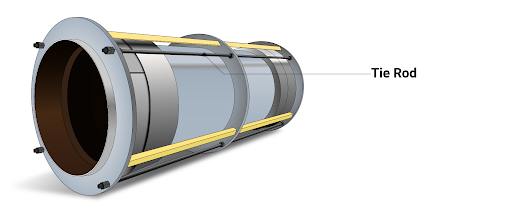
The tie rod assembly is the hardware that controls this movement (normally lateral movement). It consists of three components:
- Tie rods: Rods that span the joint from one end to the other
- Ear plates (lugs): plates welded to each end of the joint that the rods pass through
- Hex nuts: positioned on the rods based on the movement at the lugs
Tie Rod, Limit Rod, or Control Rod?
In the field, the terms tie rod, limit rod, and control rod are often used interchangeably, and they can refer to hardware that looks nearly identical: a threaded rod passing through lugs, held by hex nuts. They are, however, technically different components, and the distinction matters when specifying an expansion joint.
A tie rod continuously restrains the full pressure thrust of the system during normal operation and permits only lateral deflection. A limit rod allows the joint to move within its designed range, limiting axial expansion or compression, and restrains the pressure thrust only in the event of an anchor failure. A control rod is used on universal expansion joints to limit and control the movement of the assembly. The correct term depends on the function the rod performs, and each is custom-designed based on the pressure and load forces of the specific application.
The clearance is the deliberate gap left between the hex nut and the lug. That gap allows the bellows to move and compress without damaging the equipment. Within it, the joint moves freely as the pipe expands and contracts, and the gap defines the limit of that movement.
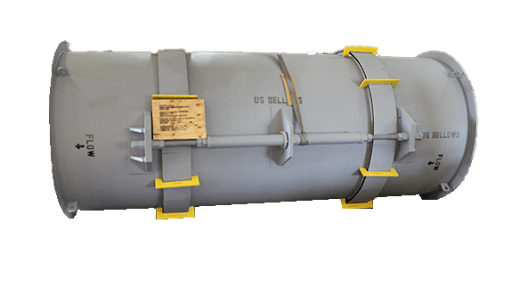
–>
How Is the Gap Calculated?
The clearance is not a standard dimension. It is unique to each expansion joint design and is determined by the engineering team based on the movement requirements of the application.
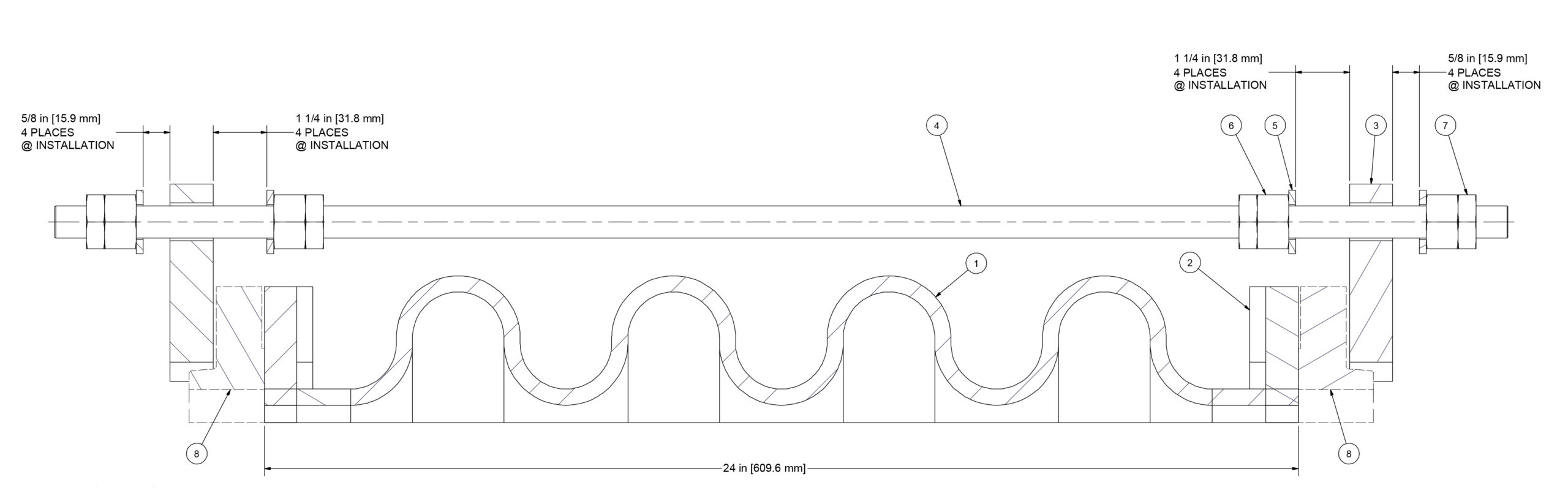
Single expansion joints – For a single expansion joint, the engineering team divides the total travel requirement in half and sets that value as the clearance on each side of the lug. For example, if a joint is designed for 2 inches of total axial travel, that travel is split across the two sides: a 1-inch gap is set between the nut and the lug on one side, and a 1-inch gap on the other. The joint is free to move within these clearances, and the nuts stop it from traveling beyond them.
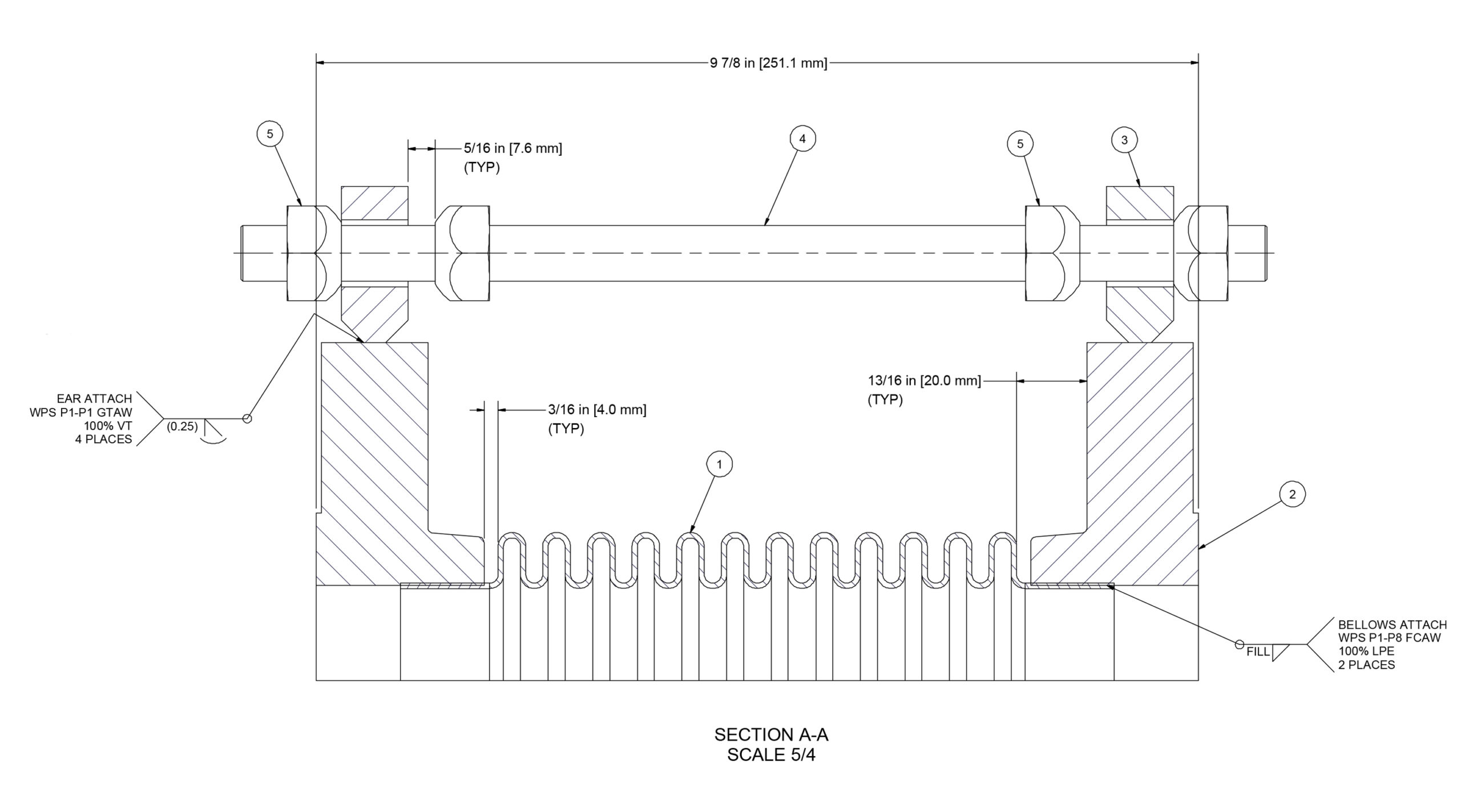
Universal expansion joints – A universal expansion joint consists of two bellows separated by a center pipe section, or spool, and is designed to absorb large amounts of lateral deflection. Because the movement is distributed across two bellows, the clearance cannot be set by simply dividing the travel in half. The engineering team determines the clearance dimensions specifically for each design.
Note – These principles apply to all expansion joint types. Including metallic, fabric, and rubber expansion joints.
What Happens When the Gap Is Set Wrong?
Improper installation in either direction puts the system at risk.
- When the Gap Is Closed (Nuts Tightened Against the Lugs)
Tightening the nuts against the lugs prevents the expansion joint from moving axially. The joint can no longer absorb the expansion and contraction of the pipe, and the thermal stress is transferred to an anchor or equipment in the piping system, which may cause a failure on either of those structures.
- When the Clearance Exceeds the Design Specification
Excessive clearance allows the expansion joint to move beyond its designed travel. If the joint is not designed to handle that level of movement, this can lead to premature failure of the unit.
Set in the Shop, Guided by the Drawings
Every assembly is fabricated and assembled at our facility before shipping. Customers generally do not need to perform any field welding on these assemblies. Where field work is required, we provide the drawings needed to guide correct installation.
Takeaway
The clearance gap between the nuts and the lugs is part of the design. It allows the expansion joint to move as intended and defines the limit of that movement. The nut positions on a new assembly are set to the design dimensions and should not be adjusted during installation or maintenance.
If you have questions about the correct clearance for your application, contact US Bellows or schedule a meeting with an engineer.
Upcoming Live Webinar
Sign-up for a Live Technical Webinar…
Fabric Expansion Joints Webinar by U.S. Bellows, Inc.
Date: Thursday, October 29, 2026 - Register for 10:00 am OR 2:00 pm
*Note: Time Zone is CDT * Central Daylight Savings Time / GMT -5h
Live Webinars are 1 PE/PDH Credit for TX Professional Engineers
Get to know U.S. Bellows from introducing our team and manufacturing capabilities to exploring design details in technical drawings for large-scale projects. View case studies that lead to the creation of new standards and designs. Learn about cost-saving measures for expansion joint failures and how to prevent future problems.
Upcoming Webinars:
October 22nd: Field Service: Problem Resolution Live Webinar 10:00 am OR 2:00 pm
View video recordings from past webinars…
Online Course
Expansion Joint Application and Design
Our Expansion Joint course was developed for the following disciplines…
- Piping system designers that may decide to use expansion joints
- Expansion joint designers use the information provided by piping system designers to determine the best design to meet the requirements.
- Designers that use modern software systems to evaluate different options
- Engineers / Managers: field, maintenance, process, operations, construction, surveyors
*This online course is approved for 8 hrs. P.E. Credits
Register Now